How to Create a Big Drum Room Sound With Plugins
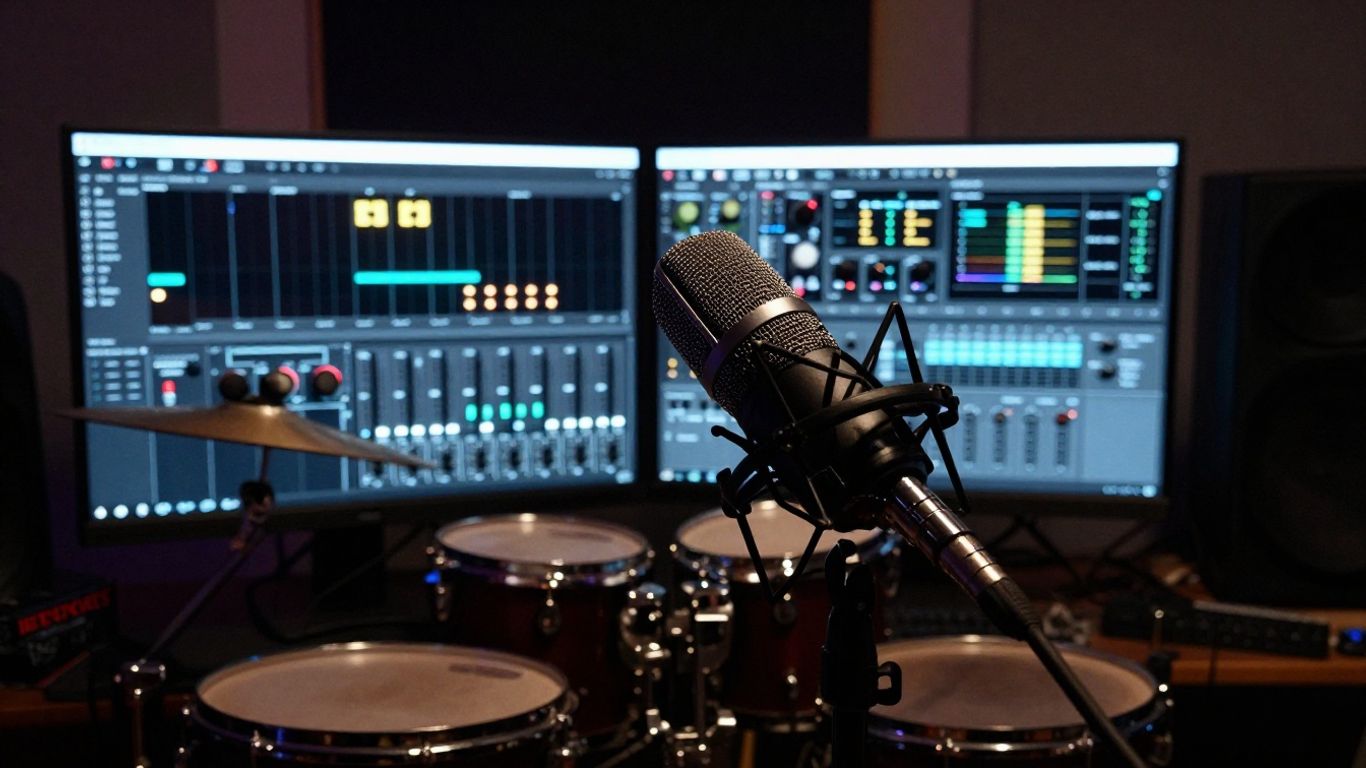
Ever find yourself with drums recorded in a small, dry space and wish they sounded bigger and wider? This video shows you how a working pro engineer approaches creating a believable, spacious drum room sound using just plugins, even when you don't have access to a great-sounding room.
Key Takeaways
- Separate early reflections from the reverb tail for better control and realism.
- Use delays on separate mono aux tracks, panned differently, to create artificial early reflections.
- Squashing early reflections with a brickwall limiter can add sustain, aggression, and a cool, gritty texture.
- Experiment with EQ on the early reflections to change the perceived size and position of the drum room.
- Using different reverb algorithms or even delays on separate buses for early reflections can add unique depth and phase shifting.
Creating Believable Drum Room Space
When your drums sound too dry, you can add space and width. The trick is to separate the early reflections from the reverb tail. This gives you more control and makes the sound more believable. We'll process these sections differently to build our virtual drum room.
Setting Up The Main Room (Reverb Tail)
First, we set up the main reverb, which acts as the "tail" of our room sound. You need a reverb plugin that allows you to remove the early reflections. The SSL X-Verb is a good choice because it has separate controls for early reflections and reverb. By setting the early reflection control to 100% wet, we isolate the reverb tail.
We send our drum bus to a stereo aux track for this main reverb. Listen to just the reverb tail – it immediately adds space, depth, and a bit of stereo width. You can adjust the decay time, tone, and algorithm to get the sound you want.
Crafting Early Reflections with Delays
This is where the magic happens for creating a realistic room. We send the drum bus to separate stereo aux tracks for early reflections. Let's call them Early One and Early Two.
On these tracks, we use a channel strip for some color and then add delays. The key is to use slightly different delay times on each channel. For example, one might be 17 milliseconds and the other 29 milliseconds. These are just examples; the exact numbers aren't as important as the difference between them.
We then group these two mono aux tracks and pan them. Instead of hard panning to 100% left and right, which isn't realistic, we pan them more moderately, say -80 and +80. This creates a wider, more natural stereo image.
Listen to the difference this makes. It adds a subtle but significant sense of space around the drums. The level should be set so you don't consciously hear the delays, but you notice the absence when you take them out.
EQing The Early Reflections
We can further shape these early reflections with EQ. Cutting some low-end and high-end on the delays can change the perception of the space. If you EQ them differently, you can make the drums sound like they're more to the left or right, or closer or further away. Adding more high-end can make the reflections sound closer.
This technique, using phase and EQ on delays, creates a very apparent effect, especially on headphones. It's like panning, but with more depth.
Squashing Early Reflections with a Limiter
A really cool trick is to squash these early reflections with a brickwall limiter. This doesn't just control the level; it adds sustain, aggression, and a gritty texture that's fantastic, especially on rock drums. The limiter adds distortion and sustain that you can't easily replicate with other processors.
Listen to the difference with and without the limiter on the early reflections. It makes the sound much richer and more impactful. You can still adjust the EQ to change the perspective, even after crushing the early reflections.
Alternative Early Reflection Method
Another approach is to use a reverb plugin like the SSL X-Verb again, but this time, use its early reflection algorithm. You can even use two different algorithms, like 'Room' and 'Plate', on separate stereo buses for your early reflections. This can create a unique effect with added phase shifting and depth.
Pan these differently as well, perhaps one more to the left and the other more towards the center, or vice versa. This creates phase cancellation and adds a lot of depth. You can then blend this with your main room reverb to taste.
Combining Techniques
As with the delay method, you can also squash these reverb-based early reflections with a limiter. Using dual mono on the limiter helps maintain the stereo field. The result is a much richer sound. The key takeaway is that crushing the early reflections with a limiter makes a significant difference. Combined with control over panning and EQ for each early reflection, you can create a completely different perspective and perception of where the drums are in the room.
This method gives you a lot of control over the stereo field and the overall perception of the drum sound. Experiment with these techniques to find what works best for your tracks.